
Think of posture as a series of small corrections tied to real tasks—rather than holding one "perfect" pose for eight hours, which most of us cannot do.
Small posture habits that help you feel better by afternoon
Good desk posture is about small shifts, not sitting rigidly. You alternate positions, reset tension, and use cues that fit typing, reading, and thinking modes.
A comfortable neutral position
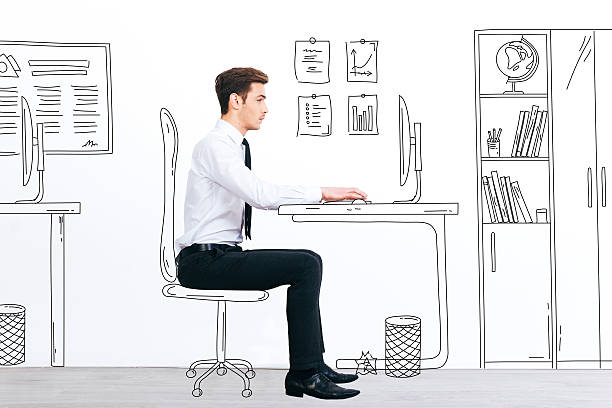
A comfortable position means ears over shoulders, ribs stacked over pelvis, and chin slightly tucked—not pushed forward toward the screen. When you lean to read fine print, bring the document closer or zoom in instead of craning the neck forward for minutes at a time.
This reduces strain on neck muscles and how often you compensate with raised shoulders. A useful cue is “soft jaw, long neck.” Say it when you open a new document. The phrase reminds you to release clenching that often accompanies concentration.
Check from your feet up: supported feet, relaxed thighs, level pelvis.
Eyes rest at top third of screen; blink fully during pauses.
Shoulders and wrists while you type
Keep elbows near the body and wrists straight rather than bent upward on the keyboard edge. If you use a trackpad, alternate hands across the week to share the load. These details affect forearm comfort during long writing sessions and how tired your upper back feels when you close the laptop.
Forming the habit: set a hourly chime labelled “shoulders down.” When it rings, drop shoulders, open chest gently, and shake hands for five seconds. Pair it with standing if your calendar allows. Over time, you may notice fewer end-of-day headaches linked to tight raised shoulders.
Stay safe while you practise new posture habits
Do not push into pain
Do not force extreme stretches into painful ranges. Comfort-led mobility is enough for general guidance.
Variety matters
Change position every twenty to forty minutes where possible. Stillness is the stressor, not sitting itself.
Get individual advice
Persistent symptoms deserve assessment by a qualified clinician, not only online tips.
Questions about posture at work
Is there one perfect chair posture?
No single angle fits everyone. Use adjustable furniture and small movements rather than a fixed pose.
Do posture braces help at a desk?
They are not a substitute for breaks, setup, and strength. Focus on environment and habits first.
Please read this
This website provides general lifestyle information only and does not constitute professional or medical advice.
We are not a medical practice, clinic, or regulated health provider. Comfort and focus vary between people; nothing on this site is a promise of specific results. See About us for who operates this website, how we publish content, and how workshops are priced and booked.